



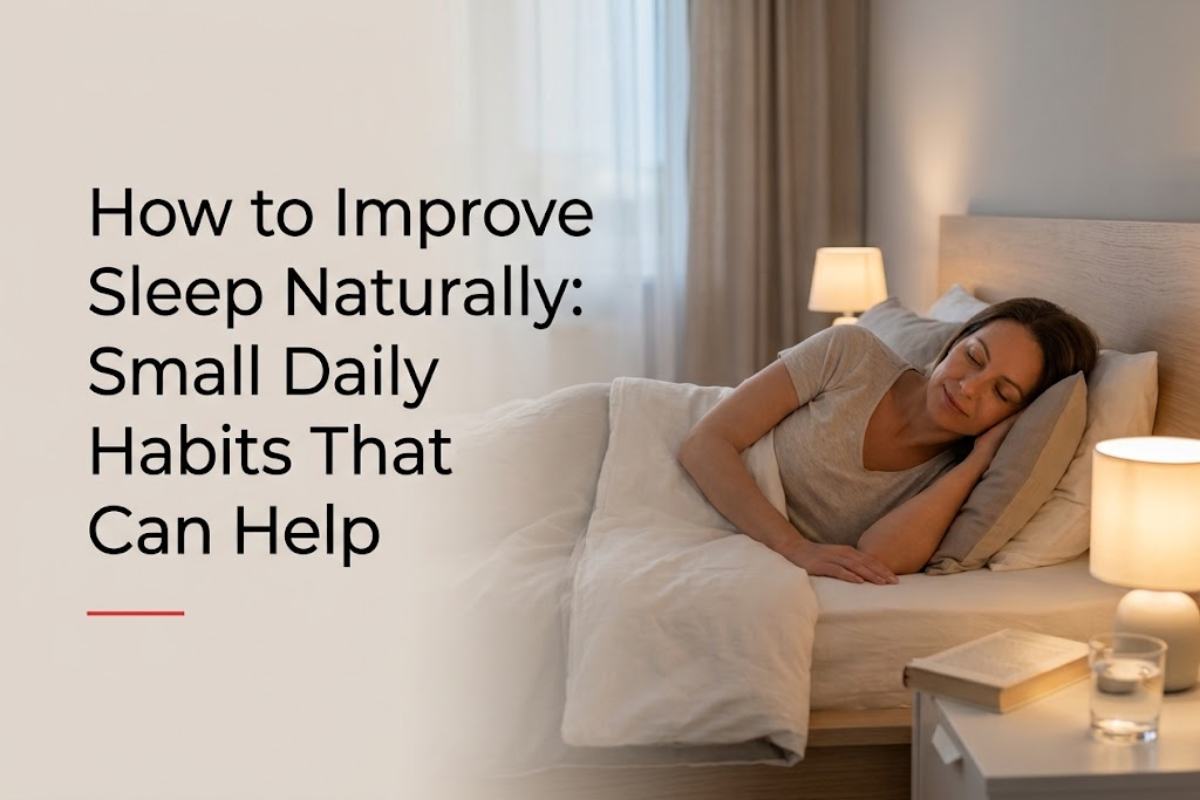
Getting better sleep is not only about spending more hours in bed. Your daily routine, evening habits, sleep environment, stress levels, food and drink choices, and exposure to light can all influence how easily you fall asleep and how well you sleep.
The good news is that improving sleep does not always require a complicated routine.
Small changes, repeated consistently, can help create better conditions for restful sleep and make your nighttime routine easier to maintain.
🌙 Keep a Consistent Sleep Schedule
One of the simplest habits you can start with is keeping your bedtime and wake-up time relatively consistent.
Try going to bed and getting up at around the same time every day, including weekends when possible.
A regular schedule gives your body a predictable rhythm and can make it easier to establish a healthy sleep routine.
You do not need to change your schedule dramatically overnight.
If your current bedtime is very late, gradually moving it earlier may feel more manageable than making a sudden change.
☀️ Get Natural Light During the Day
Your exposure to light during the day can help support your body’s sleep-wake rhythm.
Try spending some time outdoors during the morning or early part of the day.
You could:
- Take a short morning walk.
- Have breakfast near a bright window.
- Spend a few minutes outdoors before starting work.
- Open curtains and blinds when you wake up.
This is a simple habit that can become part of your normal morning routine.
📱 Create a Calmer Evening
Your brain needs an opportunity to transition from daytime activity to nighttime rest.
Instead of going directly from work, social media, or other stimulating activities into bed, create a short period of calm before sleeping.
You could:
- Dim the lights.
- Put your phone away for a while.
- Read a book.
- Take a warm shower.
- Listen to quiet music.
- Practice gentle stretching.
- Spend a few minutes breathing slowly.
You do not need to follow every step.
Choose one or two activities that make you feel calmer and repeat them regularly.
🛏️ Make Your Bedroom More Sleep-Friendly
Your sleep environment can make a difference.
Try to keep your bedroom:
- Quiet
- Dark
- Comfortable
- Cool enough for you
- Free from unnecessary distractions
If outside light enters the room, curtains or an eye mask may help.
If noise is a problem, consider earplugs or another method that makes the environment quieter.
The goal is to make your bedroom a place your brain associates with rest.
☕ Pay Attention to Caffeine
Caffeine can remain active in the body for several hours, so consuming coffee, energy drinks, tea, or other caffeinated products later in the day may make it harder for some people to fall asleep.
Pay attention to how your body responds.
If you notice that caffeine in the afternoon or evening affects your sleep, try moving your last caffeinated drink earlier in the day.
You do not necessarily need to eliminate caffeine completely.
Sometimes simply changing the timing can make a difference to your nighttime routine.
🍷 Be Mindful of Alcohol
Alcohol can make some people feel sleepy initially, but it can interfere with sleep quality later in the night.
If you regularly drink alcohol in the evening and notice that your sleep is restless or interrupted, consider reducing your intake or avoiding alcohol close to bedtime.
This is another area where paying attention to your own routine can help you identify what may be affecting your sleep.
🍽️ Avoid Going to Bed Uncomfortably Full
Large or heavy meals immediately before bedtime can make some people feel uncomfortable.
If late-night meals are affecting your sleep, consider having dinner earlier when practical.
You can also pay attention to foods that personally cause discomfort at night.
The goal is not to follow a strict eating schedule but to give your body enough time to settle before you go to bed.
🧘♀️ Give Your Mind Time to Slow Down
Sometimes the body is tired while the mind is still active.
Work, responsibilities, worries, and unfinished tasks can continue running through your thoughts when you are trying to sleep.
A simple evening “mental reset” can help.
Before bed, try writing down:
What I need to do tomorrow
and
What I can leave until tomorrow
This can give your mind a place to put unfinished thoughts instead of repeatedly going through them while you are in bed.
Other relaxing activities, such as breathing exercises, meditation, reading, or gentle stretching, may also become useful parts of an evening routine.
🚶♀️ Stay Active During the Day
Regular physical activity is another important part of a healthy sleep routine.
Walking, cycling, swimming, strength training, dancing, or other activities can help you stay physically active during the day.
You do not have to start with intense workouts.
If you are currently inactive, begin with an amount that feels realistic and gradually build from there.
One simple option is to add a short walk to your daily schedule.
⏰ Don’t Use Your Bed for Everything
If your bed becomes the place where you work, scroll through your phone, watch hours of television, and worry about the next day, it can become harder to associate it with sleep.
When possible, keep work and other daytime activities outside the bed.
Try to make your bed primarily a place for sleeping and relaxing.
This can help create a clearer mental connection between your bedroom and nighttime rest.
🌿 Build a Simple Nighttime Routine
You do not need a complicated sleep routine with dozens of steps.
A simple sequence may be enough:
One hour before bed: reduce stimulating activities.
30 minutes before bed: dim the lights and put away unnecessary screens.
Before getting into bed: complete your usual hygiene routine.
In bed: choose a calm activity such as reading or quiet breathing.
The most important part is consistency.
A familiar routine can make the transition from daytime activity to sleep feel more natural.
💚 Make One Change at a Time
Trying to change your entire sleep routine in one night can become frustrating.
Instead, choose one habit.
For example:
Week 1: Keep a consistent wake-up time.
Week 2: Get some natural light in the morning.
Week 3: Create 30 minutes of quiet time before bed.
Week 4: Move caffeine earlier in the day if necessary.
Once one habit becomes easier, add another.
This approach can make healthy changes feel much more realistic.
🌙 Pay Attention to Persistent Sleep Problems
Occasional difficulty sleeping happens to many people.
However, persistent sleep problems should not simply be ignored.
If you regularly have difficulty falling asleep, staying asleep, wake up feeling exhausted, or experience significant daytime sleepiness, consider discussing the problem with a healthcare professional.
Sleep problems can sometimes be related to underlying conditions, medications, stress, or sleep disorders, and identifying the cause can be important.
🌿 Natural Supplements to Explore
Along with healthy sleep habits, you can also explore natural supplement options related to sleep and relaxation.
[CHRONOBOOST PRO]
[NiteHush Pro ]
[YU SLEEP ]
Click on each supplement name above to learn more about the product on its official website.
A Natural Approach Starts With Your Daily Routine
Improving sleep naturally does not have to mean creating a complicated nighttime ritual.
Start with the basics:
Keep a consistent schedule. Get natural light during the day. Stay active. Give your mind time to slow down. Create a comfortable bedroom. Pay attention to caffeine and alcohol. And make your evenings calmer.
Then give your body time to adapt.
Final Thoughts
Better sleep can begin with small decisions made throughout the day.
You do not have to change everything at once.
Choose one habit that feels realistic, make it part of your routine, and build from there.
A calmer evening, a consistent schedule, and healthier daytime habits can create a stronger foundation for better sleep. 🌙💚
👉Visit NatureRemedyShop.com to explore wellness products, compare available options, discover special offers, and learn more about supplements designed for different wellness goals.
Welcome!
Thank you for visiting WellnessTipsDaily.com.
We’re happy to have you here! Our goal is to share reliable wellness tips, healthy lifestyle ideas, and practical information to help you make informed choices on your journey toward better health and well-being.
We hope you enjoy our content and find inspiration to support your everyday wellness.
If you found this article helpful, please consider sharing it so that more people can benefit from this information.
Thank you for being part of our community!